Mandala Bloom: Elevating Design with Intricate Floral Typography
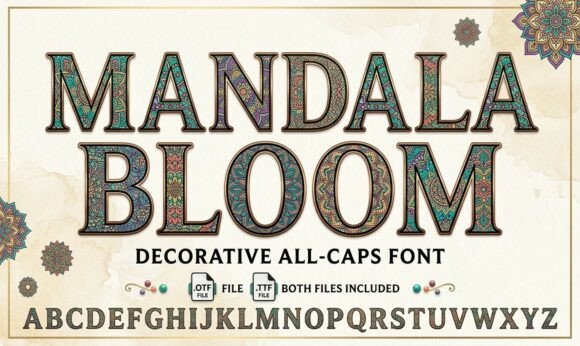
In the quest for a design element that seamlessly blends intricate artistry with versatile functionality, the search often leads to unique typographic solutions. Enter Mandala Bloom, a decorative font that transforms standard letterforms into elaborate, hand-drawn floral and mandala patterns. This isn't just a typeface; it's a comprehensive creative asset designed to inject delicate beauty and a distinct bohemian elegance into a wide array of projects.
Understanding the Aesthetic and Functional Appeal
At its core, the Mandala Bloom Monogram font addresses a common need in graphic design: the desire for personalized, visually rich elements without the time-intensive process of creating custom illustrations for every project. Each character is a standalone piece of line art, offering designers a quick way to generate ornate initials, monograms, or decorative headers. Its inherent value lies in its ability to serve as a strong visual foundation, perfect for applications where detail and a handcrafted feel are paramount.
Practical Applications in Modern Design Workflows
The true power of a resource like Mandala Bloom is realized through its application. Its intricate line work and scalable vector format make it exceptionally adaptable across both digital and print mediums. Consider its role in enhancing various facets of a creative project:
- Branding and Logo Design: Use a single initial to create a memorable monogram logo for boutique brands, wedding studios, or artisan products. It instantly communicates a sense of bespoke quality and attention to detail.
- Marketing and Social Media Graphics: Create scroll-stopping headers for blog posts, elegant Instagram story templates, or sophisticated Pinterest pins that stand out in a crowded visual landscape.
- Packaging and Merchandise: The font is ideal for designing labels, tote bag prints, and sublimation mugs, adding a premium, artistic touch that can elevate product perceived value.
- Editorial and Web Design: Employ it for drop caps in magazines, decorative elements in web banners, or unique UI components for lifestyle and wellness websites, enhancing the user experience with visual delight.
Integrating Decorative Fonts with Strategic Design Principles
While a font like Mandala Bloom offers stunning visual impact, its effectiveness is maximized when used thoughtfully within a broader design system. Key considerations include:
- Visual Hierarchy and Readability: Reserve such ornate typography for headings, monograms, or accent pieces. Pair it with a clean, highly readable sans-serif or serif font for body text to ensure clarity and balance. The contrast creates a sophisticated visual hierarchy.
- Audience and Context: This style naturally aligns with themes of nature, spirituality, bohemian aesthetics, and artisanal craftsmanship. Ensure its use resonates with your target audience's expectations and the project's overall message.
- Color and Composition: The line-art style is incredibly versatile with color. It can be rendered in a single brand color for a minimalist look, or carefully colored in sections to create a vibrant pattern. When composing layouts, allow the intricate patterns sufficient space to breathe to avoid visual clutter.
- Scalability and Format: Always use the font in a vector-based program (like Adobe Illustrator or Affinity Designer) for projects that require scaling, such as large-format printing or logo design, to maintain crisp, clean lines.
Ultimately, incorporating a distinctive creative asset like the Mandala Bloom Monogram is about more than decoration; it's about making a deliberate choice to enhance visual communication. Thoughtful design selections build stronger brand identities, engage audiences on an emotional level, and transform standard projects into memorable experiences. By leveraging high-quality typography that aligns with your design goals, you invest in the clarity, impact, and professional presentation of your work.